Antananarivo

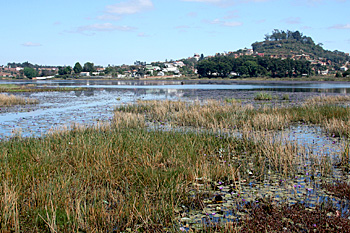
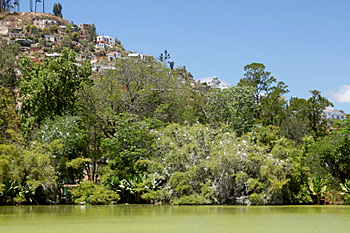
Located on the high and relatively bird-free central plateau, Tana (as it is generally known) is not an especially good location for birding - with the exception of the rice paddies which can be found even right in the centre of town (large numbers of egrets etc.), and the notably bird-rich Lake Alarobia. This privately owned lake (of about 3ha in extent) gives some hint as to the glories of Tana's wetlands in the past...sadly, they are now long gone, sacrificed to development and rice cultivation. It was largely dry and cool in Tana, although there was a massive thunderstorm on our last night there.
We started our tour in Tana, and found ourselves back in the same comfortable hotel (Le Relais des Plateaux - even the same room!) on several occasions when taking internal flights. The hotel was very near the airport, which we decided was invaluable, after having experienced the horrors of Tana traffic at first hand.
Our first endemic was a juvenile Madagascar Nightjar which flew right past us near the pool, and roosted on the poolside wall! In the hotel grounds we did see a few other birds, such as Madagascar Wagtail, White-eye, Coucal, Black Swift, and Bee-eater, Souimanga Sunbird, African Stonechat and Red Fody. However, in order to see a greater variety of birds whilst in Tana, we did visit the nearby wetlands, the Zoo and Lake Alarobia.
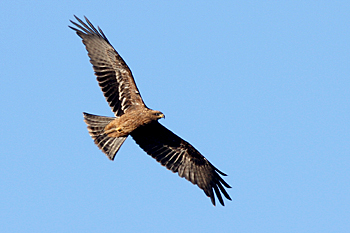
At the lake there were plenty of Dimorphic, Black and Cattle Egrets, Black-crowned Night Herons and small numbers of Madagascar Pond Heron, whose identification was oddly problematic at first, until we got our eye in. There were lots of ducks too, including Red-billed Teal, White-faced Duck, Comb Duck and a single Hottentot Teal. We eventually found one or two Fulvous Whistling Ducks, and the long-staying (and out of range) African Openbill. Also Madagascar Kingfisher and Yellow-billed Kite were present, as were Madagascar Swamp Warbler, Mascarene Martin and the ubiquitous Common Myna. The raw numbers of birds in Madagascar seemed very low, and in fact we saw more individual birds here than anywhere else in the whole of the island!
The Zoo had very few new birds, and was of interest chiefly because of the nocturnal lemur house. Here they had two Aye-ayes, which we correctly guessed we wouldn't see on this trip, and so it was good to have seen one, albeit in captivity.
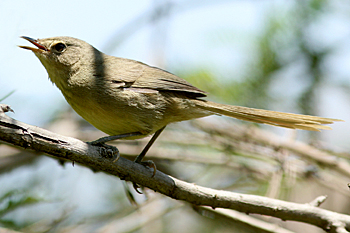
Also on a slightly plastic note, we visited the rather good "Lemurs' Park'" outside town on our last day. There are 40 or 50 lemurs of various species here, quite at liberty to wander where they like - but of course they all come back to be fed each day! We did get our best views of Madagascar Brush Warbler here, as well as a nesting pair of Hamerkops right by the café.